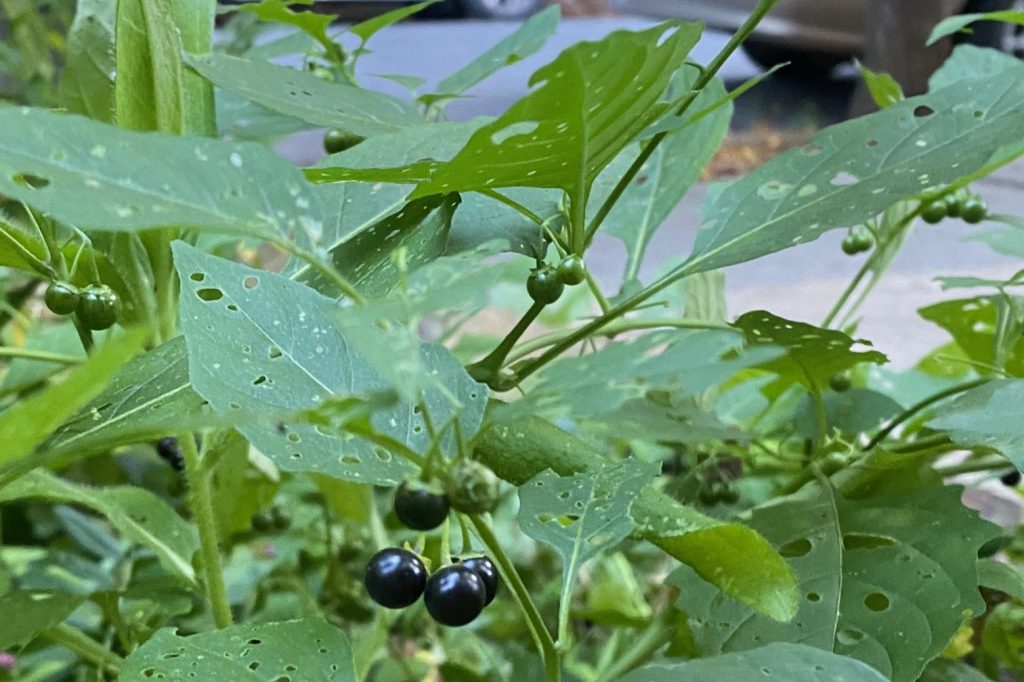
In New York’s green spaces, you might stumble across deadly nightshade – a plant as beautiful as it is dangerous, with a history that blurs the line between remedy and risk.
Have you spotted clusters of dark berries on the edge of the park or in the untamed roadside yet? Perhaps like you took them for some wild blueberries or a species of honeysuckle. Those could very well belong to deadly nightshade (Atropa belladonna), a plant whose reputation spans cosmetics, medicine, poison, and folklore.
Also called Atropa belladonna, this infamous plant has a reputation that stretches back centuries. It’s been used as medicine, as a cosmetic, and, yes, as poison. Even a few berries can be lethal, especially for children.
But here’s the twist: deadly nightshade is just one member of a massive plant family that also includes some stables foods in your kitchen like tomatoes, potatoes, peppers, and eggplants.
What Are Nightshades?
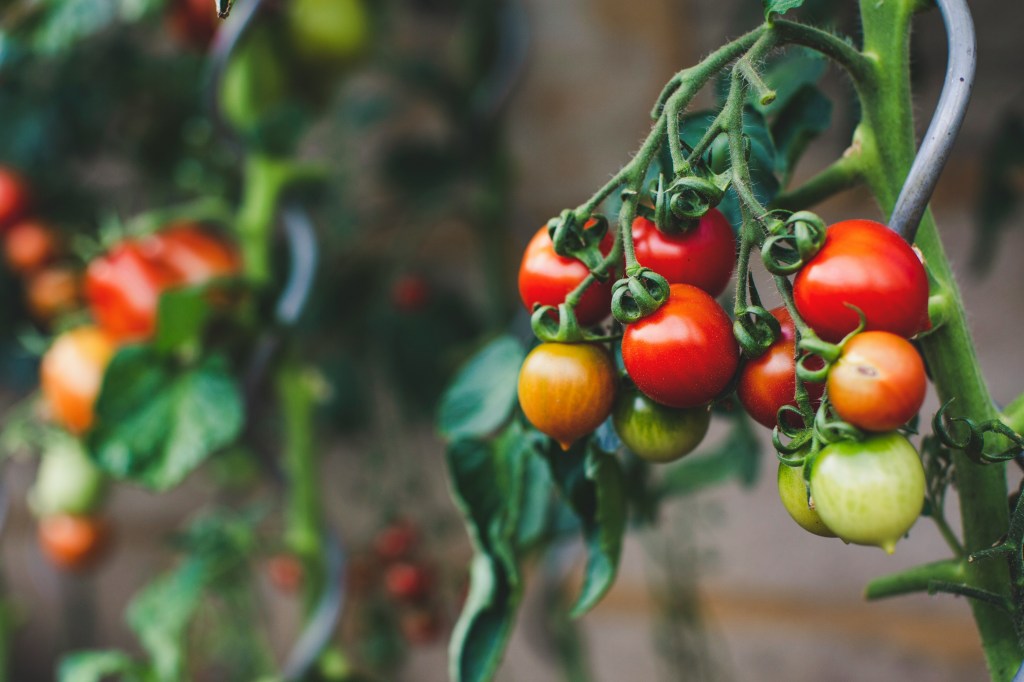
The nightshade family, known scientifically as Solanaceae, contains more than 2,000 species spread across nearly every continent. On the dinner plate, these plants are packed with delicious nutrients that help support overall health. This family tree consists of tomatoes rich in lycopene, potatoes with potassium, peppers bursting with vitamin C.
Yet also produces tobacco, other hallucinogens, and the toxic belladonna. Although Atropa belladonna, is native to Eurasia, it has found it’s niche in waste sites, roadsides, and the woods. It’s this mix of nourishing and dangerous that gives the nightshade family its unsettling aura.
Beauty and Poison
The name belladonna means “beautiful woman” in Italian, a nod to its historical use. Women in the Renaissance used its extracts to dilate their pupils, a beauty trend at the time, which was considered alluring.
This plant has a darker side: all parts of Atropa belladonna – the roots, leaves, stems, and berries – contain tropane alkaloids (notably atropine, hyoscyamine, and scopolamine) that disrupt the nervous system. Historically
It doesn’t take much for nightshade to be deadly:
- As few as 2 to 3 berries may be lethal to a child.
- For adults, the ingestion of about 10 berries is often considered lethal.
- In poisoning cases, symptoms include delirium, hallucinations, flushing, dilated pupils, tachycardia, seizures, coma, or respiratory failure.
One clinical case estimated that ingestion of roughly 15 mg of atropine (in the form of herbal tincture) led to severe toxicity.
Because of its dramatic effects, Atropa belladonna has been woven into mythology, witchcraft lore, and historical poisonings. For all of its negative effects, in controlled doses, it is medicinal.
From Solanine to Capsaicin
What’s the thread linking your roasted potatoes and deadly berries? Alkaloids, a nitrogen-containing compounds plants use to ward off herbivores.
- In edible nightshades, solanine is a well-known alkaloid (especially in green or sprouting potatoes). In very high doses, it can cause nausea, vomiting, diarrhea, and neurological effects – though such poisoning is rare.
- Tomatine is another alkaloid in tomatoes , relatively harmless in normal amounts.
- Capsaicin, in peppers, is an irritant; it causes the “burn” sensation but is also studied for analgesic and metabolic properties.]
In the case of deadly nightshade, the tropane alkaloids are far more potent and dangerous — they block acetylcholine receptors in the nervous system, causing a classic anticholinergic syndrome.
Eating Nightshades: Should You Be Concerned?
For nearly everyone, consuming tomatoes, potatoes, eggplants, and peppers is perfectly safe and beneficial. The alkaloid levels in these edible species are typically far too low to cause any harm.
Some people, especially those with autoimmune or joint conditions, sometimes report sensitivity to nightshades (e.g., worsened inflammation). The scientific evidence is mixed; no large-scale trials definitively support that nightshades worsen arthritis.
Overall, the edible nightshade family is an advantageous plant, not only for the variety of nutritious-rich and dishes one could create, or the ease of growing them in your very own garden. Not to mention the continuous research being done to provide medication ranging from inflammation to cancer, and maybe more.
Medical Nightshade Derivatives used Now
Despite its danger, belladonna’s alkaloids are used medicinally with highly controlled doses, for purposes like:
- Dilating pupils in eye exams (atropine)
- Treating certain spasmodic or motion-sickness conditions
- Acting as anticholinergic agents under medical supervision
This dual identity – killer and cure – is what makes nightshade one of nature’s most compelling plant stories.
What to Do If You Encounter Wild Nightshade
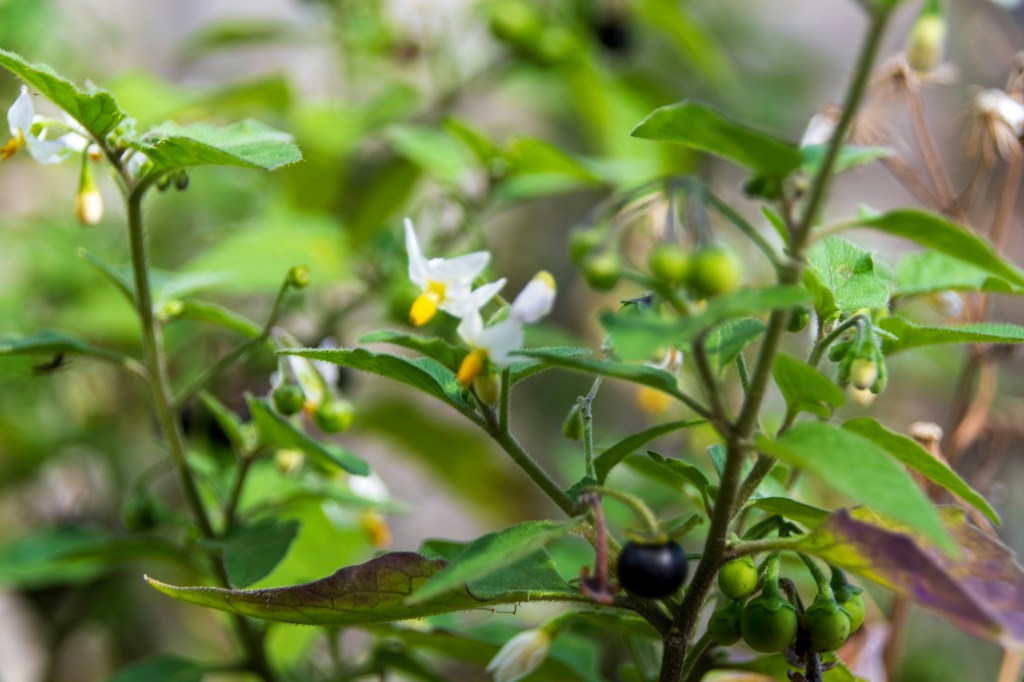
If you see dark berries growing where they don’t belong, especially if you think they might be belladonna:
- Do not touch, pick, or taste them.
- Keep pets and children away.
- Document with a photo and, if needed, contact local plant or poisoning experts for identification.
- In case of ingestion: call 911 (or your country’s emergency number). Activated charcoal may be advised if ingestion is recent, but medical evaluation is essential.
A Plant of Two Stories
Nightshades live in that fascinating space where human culture, food, and medicine overlap. In the kitchen, they’re the base of countless cuisines. In the wrong dose, they’re history’s most notorious poison.
So the next time you pass a cluster of dark berries in the park, think twice before touching them. And when you bite into a late-summer tomato, remember you’re enjoying one of nature’s most complicated families, a dangerous, delicious, and still a little mysterious.

 Outer Haven
Leave a comment