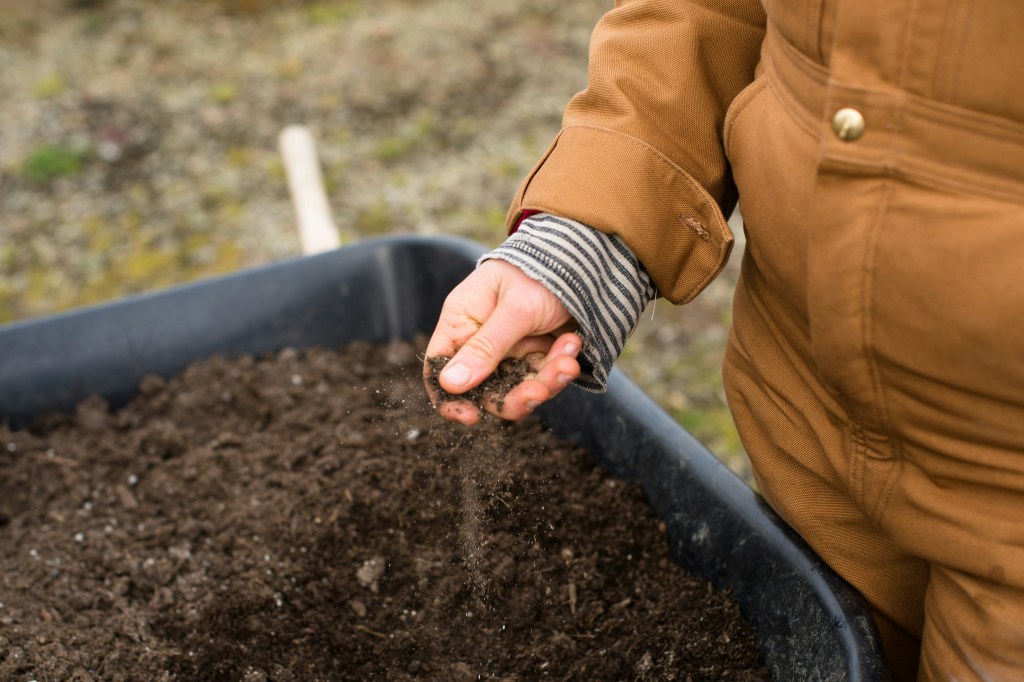
Soil is a living system that shapes our food, water, and climate, forming differently across regions based on rock, weather, and organic matter. With NYC’s expanding composting programs, residents can help rebuild healthy soils even in a dense urban environment.
Every December 5, World Soil Day calls global attention to one of the most overlooked foundations of life on Earth – Soil. For many New Yorkers, soil can feel distant, something found upstate, in bagged mixes from Home Depot, or in tiny community garden beds tucked between brownstones. But soil is the solid foundation behind the food we eat, the parks we enjoy, and even the climate we are trying to stabilize.
Soil is kind of Alive
Soil is not just “dirt.” It’s a dynamic ecosystem made up of minerals, organic matter, microorganisms, water, and air. One teaspoon of healthy soil contains more organisms than there are people on the planet. These microbes, fungi, and insects break down organic matter, such as fallen leaves, dead plants, food scraps, and recycle nutrients back into the earth. A functional-self-sustaining recycling system that is never ending. Scientifically, it involves several interconnected processes.
This process forms the soil cycle:
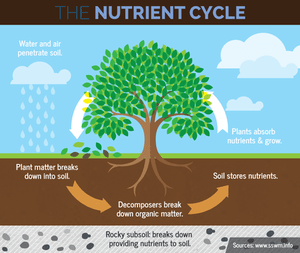
In the formation of soil, organic matter falls or is added to the ground. It could be organic matter like leaves, and other inputs like rock fragments which give nutrients like calcium, iron, magnesium, and potassium. Not to mention what comes from the air like dust, pollen and nitrogen.
Microbes and decomposers break it down. Bacteria, fungi, and actinomycetes break down the material releases nutrients (nitrogen, phosphorus, sulfur), creates humus, and supports soil structure. During this process, Carbon Dioxide is also released into the air.
Nutrients return to the soil. Water moves particles downward through the soil profile.
Nutrients may leach deeper, while clays or organic compounds can move upward or sideways.
Plants absorb those nutrients. Soil carbon is released through respiration, erosion, or decomposition. Wind, rain, and human disturbance can remove soil layers.
Plants grow, eventually die, and cycle begins again. As organic matter falls each season and decomposes, the cycle repeats. In undisturbed environments, this creates thick, rich topsoil over centuries. In disturbed soils (like much of urban NYC), the cycle is disrupted — which is part of why composting and soil restoration matter.
However, the cycle can be slow. It could take 100–400 years just to form one centimeter of rich topsoil. That makes soil a non-renewable resource within the human timeframe – one we must protect.
Why Soil Matters
For urban residents, soil affects daily life more than most realize. It effects your food – from restraunts to supermarkets. Almost every bite of food depends on soil health – even if it imported from elsewhere. When the city has floods, the drains are working overtime while soil helps filter and absorb stormwater. This reduces flooding, a rising concern for New York.
Soil is also one of the world’s largest carbon sinks. Meaning that healthy soil stores carbon and if disturbed, it releases it. Our parks and backyard depend on healthy soil, not only for it’s beauty and a breath of fresher air in a polluting city – but trees and plants also help cool our streets in the blazing summer.
Even New Yorkers living in apartments interact with soil through community gardens, window boxes, farmers markets, and the food chain.
Human Impact: How We’ve Changed Soil
Globally, an estimated one-third of soil is degraded due to pollution, erosion, deforestation, over-farming, and climate change. Cities add extra stress: construction compacts soil, reduces biodiversity, and can contaminate land.
Urban soil often struggles with compaction from buildings, cars, and people. Pollution from heavy metals and runoff find their way into soil. With people cleaning up leaves and fallen over trees, there is a loss of organic matter to start the process. Not to mention, but heat not only effects you but the soil as well.
All this makes it harder for trees to grow, increases flooding risks, and limits urban agriculture.
But cities can also be part of the solution.
NYC’s Composting Movement: Turning Waste Into Soil
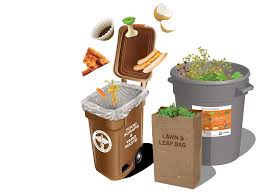
New York City has one of the largest urban composting systems in the U.S. and it plays a direct role in rebuilding soil. Through curbside composting and community drop-off sites, food scraps and yard waste are collected and turned into nutrient-rich compost at facilities like DSNY’s Staten Island compost site and local community compost systems in Brooklyn and the Bronx.
This compost is then used to restore city parks and street trees, support community gardens, improve stormwater management, and reduce the need for chemical fertilizers ( which can impact not only the ecosystem but your outside pets).
In 2024–2025, NYC expanded citywide universal curbside composting, meaning every borough now receives weekly brown-bin collection. That represents millions of pounds of organic material diverted from landfills – where food scraps would have turned into methane, a potent greenhouse gas – and instead transformed into healthier soil. If you have your own garden at home, you can get free compost from the city.
How New Yorkers Can Support Soil Health
Even in a city apartment, you can help restore soil by using your brown compost bin or local growNYC drop off. If you are able to, buy from local farmers markets as healthier soil supports sustainable agriculture. This could be the spring that you start your own garden at home, even a pot from the window can help you understand the soil cycle.
You could volunteer or support local community gardens and street tree stewardship programs. Or take it as a calling to reduce single use plastic and water if possible.
World Soil Day is a reminder that soil is not distant – it’s connected to every meal, every tree canopy, and every effort to make NYC greener and more climate-resilient.
If New Yorkers can transform their food scraps into living soil, the world’s largest cities can help heal a resource we cannot replace.
 Outer Haven