
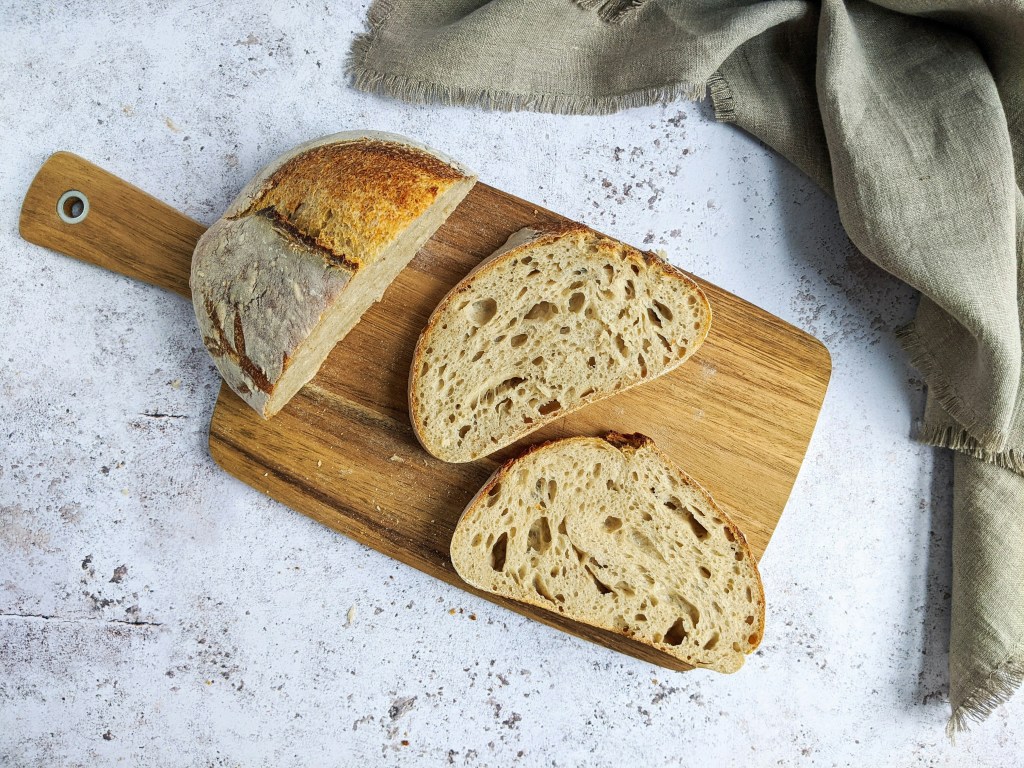
The 4 ingredient ancient bread recipe that has taken over the internet. Find out why this bread has become so popular, if it actually is better for you, and how you can start your own bread journey.
Reels, YouTube shorts, and other social media platforms are showing the rise of a sourdough empire. A bread that only is made out of four ingredients: Water, bread flour, salt, and time. Hashtags like #StarterLife and #BreadTok guide an ever-growing community sharing starter jars, “crumb shots,” cast-iron Dutch ovens, and the ever-growing recipes you can use with sourdough. What was a fading ancient baking recipe has become a 21st-century cultural phenomenon.
Beyond the aesthetics and nostalgia lies something deeper. For many, sourdough represents a return — a return to simpler food, homemade over convenience, fermentation over factory. And with that return comes a reexamination: could sourdough be better for us?
Recent nutrition and food-science research says: Yes – under the right conditions, sourdough might carry real, measurable benefits. Especially when combined with “ancient” wheat varieties, the results become particularly compelling.
Much of the fascination comes from more than aesthetics. For many, sourdough promises a connection: to tradition, creativity, to times when food was made of simpler ingredients. For others – in an age of rising health consciousness – it offers something more: a believable pathway to bread that feels wholesome, digestible, and real.
This rising tide has not only reshaped how we bake – it’s reshaped how we think about bread
Is Sourdough Good for you?
Sourdough is in fact one of the oldest forms of baking, there is evidence to believe that sourdough’s origin begins in the early 2000 BC in Ancient Egypt – one of the first recorded civilizations. The decline with sourdough was in correlation of the invention and commerlization of yeast around the mid-1900s. As families got busier, along with the convience of store bough bread; the bread making laid in the hands of baking artisans and factories.
With the rediscovery of bread making and health comes a reexamination: Could sourdough be better for us?
Nutrient
Not all flour is created equal
Put simply: When you pair traditional fermentation with grains rich in bioactive compounds, you get a loaf that’s more than just carbs – it’s a functional bread.
Not all flour is the same. Some bakers now favor “heritage” or “ancient” wheats – such as emmer, spelt, khorasan, or einkorn – reviving grains that predate modern industrial wheat varieties. In a 2022 peer-reviewed study, researchers fermented breads made from ancient wheats with spontaneous sourdough cultures (wild lactic-acid bacteria + yeasts) and tested their nutritional profile. They found that ancient-wheat sourdough breads – particularly those using emmer or spelt – released more phenolic compounds and exhibited higher antioxidant capacity after fermentation, compared to breads made with modern wheat plus commercial yeast.
In some cases, total phenolic content (TPC) increased during fermentation – a positive sign, since phenolics are linked to antioxidant activity, which helps counter oxidative stress in the body.
Another study showed that breads made from yet another ancient wheat – einkorn – held higher carotenoid content compared to modern-wheat breads, and that sourdough fermentation preserved many of these benefits even after baking and in vitro digestion.
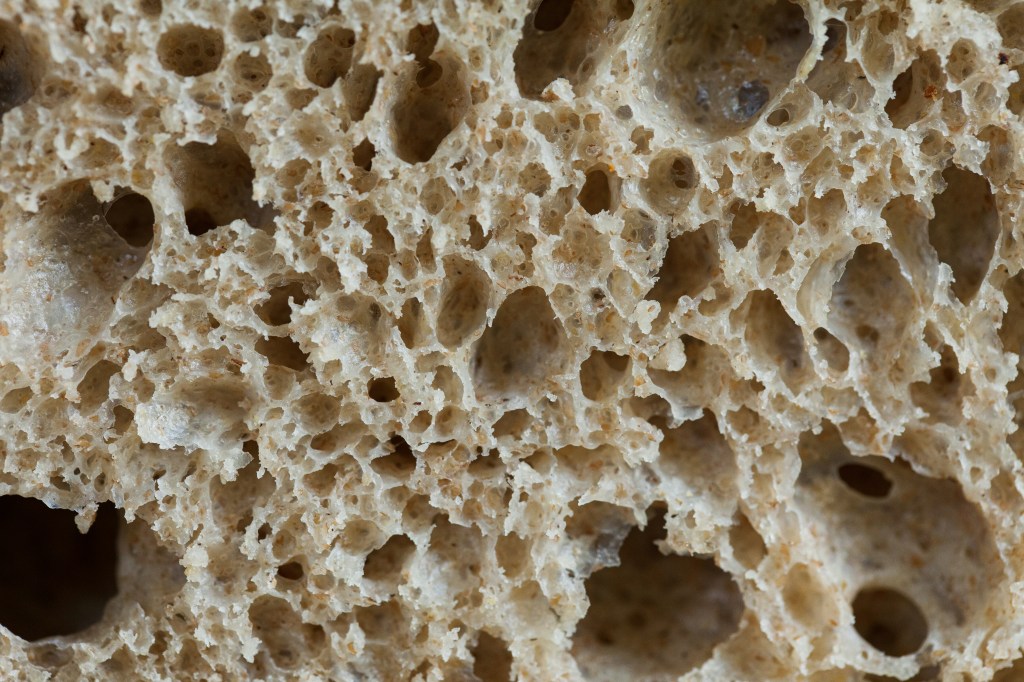
What Fermentation Does (and Why It Matters)
- Boosted antioxidant and functional compounds: In the aforementioned 2022 study, sourdough fermentation increased phenolic release and in vitro antioxidant capacity in ancient-wheat breads, relative to both the raw flours and yeast-fermented breads.
- Mineral bioavailability & reduced antinutrients: A systematic review of clinical and nutritional studies on sourdough found that fermentation helps degrade phytic acid — a natural “anti-nutrient” in grains that binds minerals like iron, zinc, magnesium, and reduces their absorption.
- Potential anti-inflammatory and protective effects: In a 2022 study on fermented spelt (Triticum dicoccum), sourdough fermentation significantly elevated total phenolic and flavonoid content; when exposed to inflamed human intestinal cells, fermented flour showed stronger antioxidant and anti-inflammatory properties than non-fermented flour – suggesting real functional effects beyond mere nutrition.
- Improved bread quality and digestibility over time: A 2024 study that varied fermentation times and ancient-wheat flour types found that longer fermentation increased mineral content, total phenolics, cellulose (fiber), and antioxidant activity; it also improved textural and sensory qualities of bread.
- Changes in carbohydrate structure & potential glycemic benefits: Experimental work on sourdough fermentation shows alterations in certain fiber components (like arabinoxylans) – potentially influencing digestion, glycemic response, and the quality of dietary fiber.
Reasons for all the fermentation crazy that has started prior to 2020 with multiple foods and beverages like Kombucha.
Health Promises – A Reality Check
What looks promising in the lab doesn’t always translate cleanly into health guarantees for everyday eaters. A systematic review from 2022 (25 clinical trials, 542 participants) assessed outcomes like glycemic response, appetite, gut health, and cardiovascular markers when people ate sourdough versus standard yeast breads. While some studies found improved glycemic response, satiety, or gastrointestinal comfort, more than half showed no significant difference between sourdough and conventional bread.
Still – most studies agreed on at least one dependable benefit: improved micronutrient bioaccessibility, especially when whole-grain or ancient wheats were used.
In other words: sourdough isn’t a magic bullet. Its effects depend heavily on grain type, fermentation method, starter culture, and bread recipe.
This nuance may be lost in broader media narratives — where sourdough is often lauded as “digestive-friendly,” “low-GI,” or “superfood bread.” The truth is more modest: sourdough is a promising, functional loaf — but one whose major benefits appear under the right conditions.
Why the Sourdough Revival Resonates — On and Off-line
The growing obsession with sourdough is not just about health or science. It’s also cultural.
People have increasing become wary of ultra processed foods, and sourdough offers a slow food simplicity: just flour, water, salt — and time.
It can become a mindful process, a ritual. Feeding a starter, kneading dough, waiting for rise – baking sourdough demands patience. In that waiting, many find a kind of grounding, a chance to slow down. For many, sourdough offers the warmth of bread with a sense of intention — a small everyday act aligned with broader health, sustainability, and authenticity goals.
With the growing bread community online, sourdough connects people: sharing starter jars, recipes, fails and wins; swapping tips, and photos. It’s food made social again.
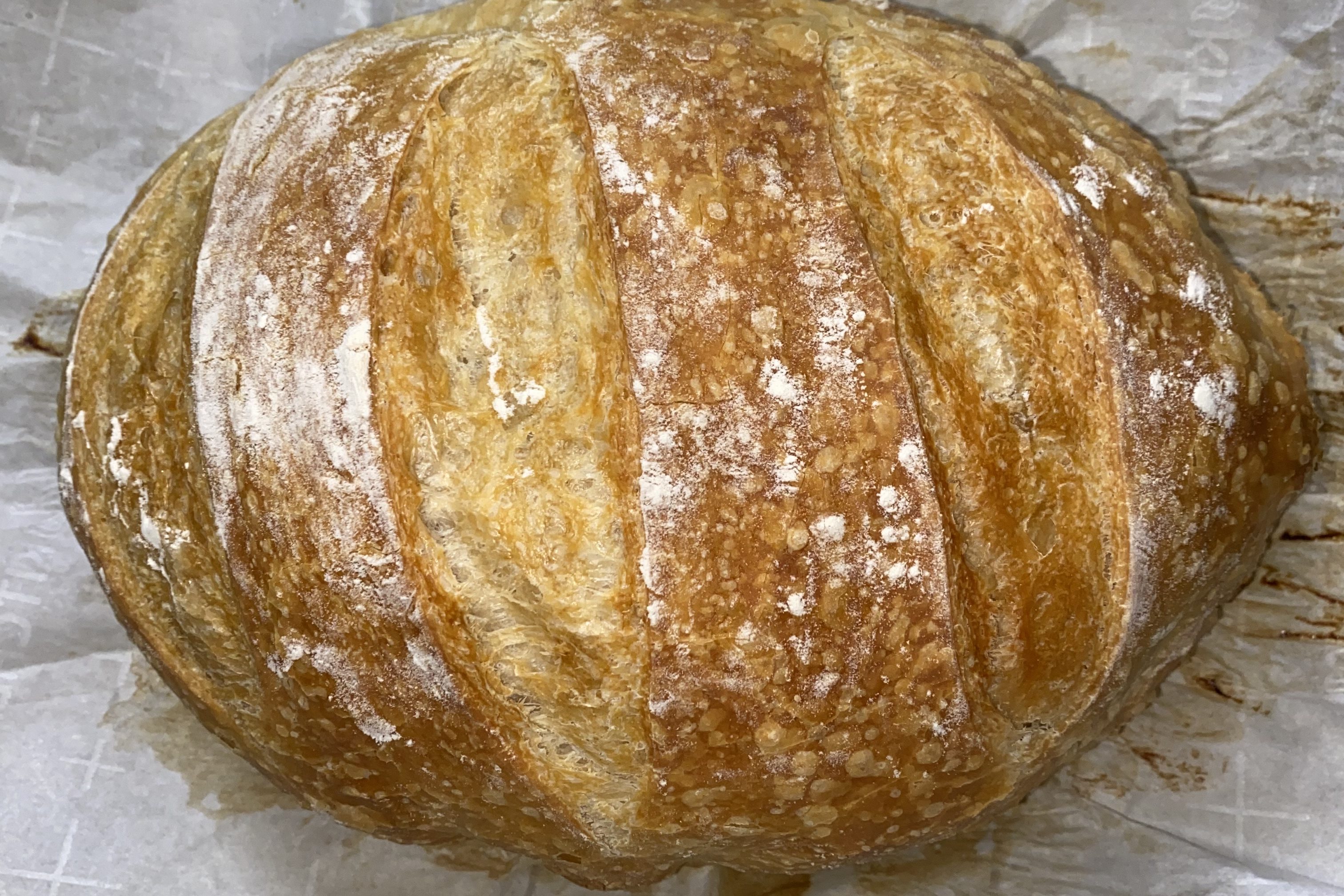
How to start your own sourdough starter
While there is the option of buying a sourdough starter, here is a way that you can make it at home –
A sourdough starter is just flour, water , and time– but what you’re really doing is building a living culture of wild yeast and lactic acid bacteria. These microbes naturally live on flour, in the air, and on your hands. When you feed them regularly, they form the bubbling, tangy starter you use to make sourdough bread.
Below is an easy, reliable way to get one going in one to two weeks.
What You Need
- A clean glass jar (16–32 oz)
- A loose lid or cloth and rubber band
- A kitchen scale (ideal) or measuring cups
- Flour (whole wheat or rye works best to start; all-purpose or bread flour works too)
- Water (filtered or tap that has rested to let chlorine dissipate)
Day-by-Day Instructions
Day 1
Mix:
- 50g Flour (ideally whole grain flour)
- 50g water
Stir until no dry flour remains. Ideally you want a texture of thick pancake mix. Cover loosely.
Why this works:
Whole grain flours contain more natural microbes and minerals, helping fermentation begin faster.
Day 2
The results may not be in yet. Remember this is a living starter, so it must eat.
Feed your starter:
- Discard half.
- Add 50g flour + 50g water.
Mix well.
Note: The reason for this discard is to give your starter more room to grow in the jar, otherwise if it rises it could come spilling out. Ideally you do not necessarily need to discard starter once activated. Just feed, let it activate, use what you need, feed, and put in the fridge for a slower rate of fermentation. Use when you need after that!
Day 3
You should see more bubbles, a slight rise, and mild tangy smell.
Feed again: same as Day 2.
What’s happening:
Lactic acid bacteria (LAB) are becoming more active, lowering the pH. This makes the environment safe for beneficial wild yeast, which begin growing next.
Day 4
Your starter should be rising and falling between feedings.
If it’s still sluggish, don’t worry – keep feeding once a day, you are making it stronger!
Day 5–14 Your starter should:
- Double in size within 4–8 hours depending on the temperature of the environment. It could be longer if it is cold.
- Smell pleasantly tangy, fruity, or yogurt-like
- Look bubbly and airy
- Have a “domed top” when fully risen
When your starter doubles reliably, it’s ready to bake. You can always check by doing a float test in which you take a gallop of starter and if it floats on water, it is ready to use.
You can now:
- Keep feeding daily (if left at room temperature)if you are baking daily
- Store it in the fridge and feed weekly
- If your starter starts to show dark liquid or a very sour smell – it’s hungry not spoiled.
- You can keep track of how much it has risen with a rubber band
- Make sure that you are not completely closing your lid- the bacteria need oxygen
Happy Baking! Stay Curious!
 Outer Haven