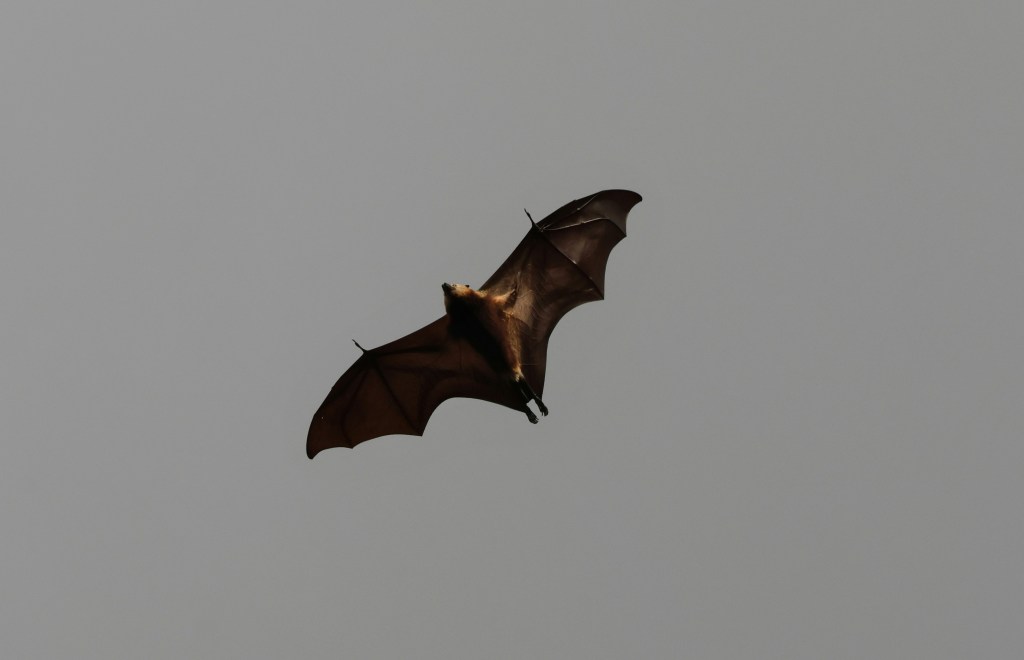
As Halloween fills New York with tales of vampires and things that go bump in the night, the city’s real nocturnal creatures — bats — are quietly saving our skies, streets, and crops.
You think you know New York City’s nightlife? Think again.
While you’re waiting for the train, grabbing a late-night slice, or taking a stroll near the park and witness odd flying birds you can’t really make out? In the shadows of high-rises and along river corridors, nocturnal mammals slip out across boroughs, darting between trees and rooftops. For many, they remain unseen ghosts of the city; for the city itself, they are unsung sentinels of the city’s ecological health.
They are not here for your blood.
In a metropolis rife with lights, noise and concrete, the presence of bats is itself an indicator of ecological resilience. A recent study of “Bats as indicators of ecological resilience in a megacity” argued that bats’ persistence, species diversity and activity levels can reflect a city’s ability to adapt and maintain ecological function in the face of disturbance. In New York, where green space is at a premium, this spotlight is perhaps overdue.
Here’s the latest on these small misunderstood mammals that need our help more than ever.
What Bats Do for Gotham
Across the globe and in New York, bats provide vital ecosystem services: insect suppression, seed dispersal, pollination (in some regions), and nutrient cycling. All of which are functions for a healthy ecosystem and human well-being. Although the evaluation of bat’s handiwork has been studied more so in recent years – one can say that bats do a profound amount of work.
In an urban context, the insect-eating behavior of bats translates into real benefits we can feel. A 2021 urban study found that insectivorous bats in city landscapes consumed large numbers of pest insects – including mosquitoes, beetles, termites, and moths – thus reducing pressure on chemical pest-control efforts. For New York City, where standing water, wetlands and built environments coexist, that means fewer mosquitoes buzzing in the park, fewer pests in gardens, and less need for broad-spectrum chemical sprays.
A local acoustic survey in the Bronx found multiple bat species active through seasons in major urban blocks. In this study, five species were recorded, and higher bat activity correlated with warmer nights ; evidence that even in concrete-dominated landscapes, bats take advantage of urban micro-habitats.
Further evidence from New York’s green-roof study found that bats recorded activity at rooftop sites with vegetation, underscoring how even non-traditional habitats in the built environment can support bat foraging and movement.
What does this all mean?
That if you are not a fan of itchy mosquito bites, or termites making their way into your home. Bats are your partner in crime. In this concrete jungle, bats are quietly performing ecological labor in one of the densest cities in the world.
The Night Turns Darker: Challenges Facing NYC’s Bats
Even as we benefit from bats, they are under siege from a series of intertwined threats.
Disease: White-Nose Syndrome and beyond
Perhaps the best known threat, white-nose syndrome (WNS) is a fungal disease that has decimated bat populations across North America. Expert assessment suggests 53 % of North American bat species have a moderate to very high risk of extinction in the next 15 years. While WNS primarily affects hibernating species in caves, urban populations are not immune to its ripple effects – reduced numbers, altered community structure and increased vulnerability.
Habitat Loss, Urbanization & Light Pollution
Urbanisation constrains roosting sites, foraging corridors and safe flight paths. In New York City, many bats rely on tree hollows, older buildings, bridges and vegetated rooftops. Many of these places are under pressure: trees are lost, attics sealed, green roofs replaced, lighting increased. A study on urban bat diversity in temperate environments argues that urbanization often leads to reduced species richness, with only certain generalist species persisting.
Ecological Change & Climate Stress
Bats’ activity is finely tuned to environmental cues: time of sunset, ambient temperature, insect availability. A recent coastal-temperate study found that mean hourly temperature, day of year and time since sunset were strong predictors of bat activity. NyaS Pubs+1 As climates shift and insects respond differently, bats may face mismatches between foraging behaviour, prey availability and habitat suitability.
Misunderstanding and Fear
Paradoxically, what may hinder bat conservation most is human misunderstanding. Bat populations are fragile in some species, yet fear of disease and myth about “vampire bats” persist. Research on risk communication found that messages which include the ecological benefits of bats improve public intention to follow wildlife safety guidelines . This means that privileging fear can undermine both health and conservation.
A Closer Look: NYC’s Bat Landscape
In the Bronx acoustic study, five species were detected in densely built urban blocks: the big brown bat (Eptesicus fuscus), eastern red bat (Lasiurus borealis), hoary bat (Lasiurus cinereus), silver-haired bat (Lasionycteris noctivagans) and tri-colored bat (Perimyotis subflavus).
Other studies suggest New York State supports up to nine bat species, many of which might use city parks, green roofs and riparian corridors for migration or foraging. Meanwhile, rooftop and green-roof surveys in Manhattan found bat activity higher on vegetated roofs than on conventional ones.
These findings have two implications: first, bats are present urban-wide; second, preserving and enhancing the built-environment habitats they use is essential.
How New Yorkers Can Help
If bats are walking unseen among New York’s trees and rooftops, our responsibility is to become more than mere observers. Here are practical steps:
- Protect and preserve roost sites
If bats roost in your attic, wall cavity or building infrastructure, avoid sealing exits during late spring/early summer when pups are present. Consult a bat-certified wildlife professional. - Create bat-friendly habitat
Plant native trees/shrubs, especially near waterways. Consider installing a bat box on a building or roof. Urban green patches and water-edge vegetation significantly boost foraging opportunities. - Reduce artificial light and pesticide use
Use warm, low-glare lighting outdoors. Skip broad-spectrum insecticides; they reduce insect prey and may indirectly harm bats along with other animals. - Support monitoring and science
Local acoustic surveys show bats thrive when we give space and resources. Reporting bat sightings, supporting local conservation groups, and engaging in citizen science helps build baseline data. - Educate & shift the narrative
Share that bats aren’t scary. They are in fact essential. Research shows that benefit-framed messages help people adopt safer human-wildlife behaviors.
A City That Sleeps Better Because of Bats
This Halloween season, while jack-o’-lanterns flicker and subways looking like Halloweentown, glance upward. Those silhouettes gliding through dusk aren’t specters – they’re New York’s original night guardians. Behind every flap of wing is a suppression of pests, a link in the water-to-trees ecosystem, a hint that the city still harbors wildness.
Protecting them means preserving one of the city’s last wild threads – a quiet web of nature that fly above roar of traffic and neon lights.
Learn more on how you can protect these fluffy wing creatures

Designed with WordPress
 Outer Haven
Leave a comment