
Waymo’s driverless scouts are stalking NYC streets and 100,000 cabbies just felt a chill down their spines
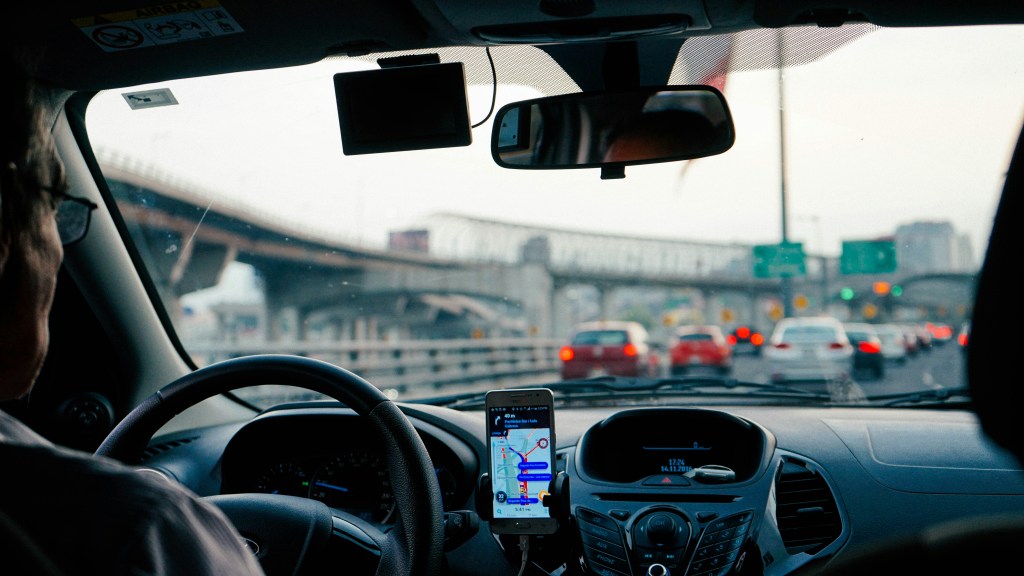
This week, Waymo – an autonomous vehicle company owned by Alphabet (Google’s parent company), launched a driverless car pilot in parts of New York City and Northern New Jersey. These self-driving cars aren’t taking passengers yet, they are now mapping out the city with safety drivers at the wheel. Prepare to see these future robotaxis strolling on the streets of Manhattan, Brooklyn, Jersey City, and Hoboken.
The announcement has stirred both excitement and unease, especially in a city known more for honking horns and jaywalking than perfectly mapped intersections.
The First Step Toward a Robotaxi Future
Waymo has been around for over a decade–starting from Google’s project in the early 2000’s for a self-automated vehicle. This project has transformed and is now running automated vechiles in places like Phoenix, San Francisco, Los Angeles, Austin, and Atlanta. In some locations, Waymo One is collaborating with Uber, which you can find on the Waymo One App.
While New York is not the first city Waymo has operated in, it is by far the most challenging. Waymo describes New York as “one of the most complex driving environments in the world” and says it hopes to further train its AI system by exposing it to dense traffic, construction zones, cyclists, aggressive drivers, and unpredictable pedestrians (Waymo Blog).
The company emphasizes that safety drivers will remain in the vehicles throughout this initial phase, collecting data and refining their autonomous “Waymo Driver” system. The tech powering these vehicles includes high-definition cameras, radar, LiDAR (laser-based mapping), and AI-driven neural networks that help detect objects, read traffic signals, and predict the behavior of nearby cars and pedestrians.
Echoes of the Past: Yellow Cabs vs Uber/ Lyft and now AI
Waymo’s quiet rollout is already raising alarms for the city’s taxi and for-hire vehicle sector, which is still recovering from the economic blow dealt by the rise of Uber and Lyft a decade ago.
In a June 2025 interview with Gothamist, Bhairavi Desai, co-founder of the New York Taxi Workers Alliance, said: “This is just big money from tech finance trying to… essentially destroy a workforce”.
Taxi drivers fear history is repeating itself. When Uber and Lyft entered the NYC market, medallion values collapsed and many drivers were pushed into debt. Now, autonomous vehicles could threaten to eliminate driving jobs altogether, with some unions calling for stronger regulation to protect workers.
Lessons from Phoenix, San Francisco, and LA
Waymo stands that human drivers would long be around with robotaxi’s, and that many would benefit from the automotive industry it would boost. Such as jobs, and less accidents behind the wheel.
Waymo’s experience in other cities provides insight into what might happen in New York:
- Phoenix: Waymo began offering fully autonomous public rides in 2020. In early 2025, it surpassed 10 million paid rides across all cities, including Phoenix, San Francisco, Los Angeles, and Austin
- California: In San Francisco and Los Angeles, Waymo now completes over 250,000 paid rides per week. According to Business Insider, Waymo vehicles have been involved in far fewer pedestrian-related collisions than human drivers and show a much lower crash rate overall.
- Consumer Behavior: Research from Earnest Analytics shows that in markets where Waymo operates, Uber users reduce their spending on Uber by 7.5% after trying Waymo, and Waymo retains over 33% of users after three years, compared to Uber’s 23% retention.
- Price and Preference: Waymo rides can cost 30–40% more than Uber or Lyft, but riders often choose it for safety and comfort. TechCrunch reports that nearly 70% of riders who try Waymo prefer the experience despite the price premium.
What is Next for NYC
Waymo is still in the early stages of testing in NYC, but it’s mapping rapidly. The company also has active or planned operations in Philadelphia, Boston, Miami, Washington, D.C., Dallas, Nashville, and San Diego. In Phoenix, the company recently rolled out solo teen accounts, and similar expansions are expected in other cities soon (Axios).
New York regulations currently require a safety driver behind the wheel, but companies like Waymo are lobbying for permission to operate fully autonomous vehicles here. According to Times Union, a major campaign is underway to influence state lawmakers.
Who is to say that, similar to Uber, Waymo would be able to buy themselves into New York?
The Bottom Line
Waymo says its technology can improve road safety and reduce traffic deaths. Yet the arrival of autonomous vehicles in NYC raises pressing questions: Who benefits from this technology? What happens to thousands of for-hire drivers? And how does the city prepare for a driverless future in one of the most densely populated, unpredictable environments on Earth?
For now, the robotaxis are watching and learning. But they may be coming for your curb next.
 Outer Haven