

Each spring, New York City becomes a stage for one of the world’s most extraordinary phenomena: the Great Migration. From ruby-throated hummingbirds to bright yellow and black warblers, tens of thousands of birds pass through the five boroughs on their way north, drawn by warmer temperatures and the promise of nesting grounds. But not all birds make it through safely. Between the glassy high-rises and artificial lights, the city presents both refuge and risk.
As the only bird rehabilitation center in New York City, the Wild Bird Fund sees the direct impact of migration—and the many dangers birds face along the way. “We get lots of window collisions,” said Catherine Quayle, Communications Director at the Wild Bird Fund. ” Some of these birds are really tiny and people won’t see them and they’ll step on them. Or building owners will sweep them up while they’re still alive. That happens, sadly, quite often.”
But as sobering as that is, migration season in the city is also magical.
A City of Wings and Green
With more than 300 species of birds migrating through NYC each year, it’s one of the most vibrant places in the U.S. to witness spring migration. From Prospect Park to Central Park, Fort Tilden to Inwood Hill, the city’s green spaces become havens for both birds and birdwatchers.
“This time of year is quite spectacular for migration,” said Andrew Maas, Director of Communications and Marketing at NYC Bird Alliance. “Millions of birds are passing through on their way to their northern breeding grounds as far as north as the Arctic Circle.
New York happens to be along the Atlantic Flyway, a route from Florida to Greenland that birds use. Think of it has a major highway, that some use to stop and refuel or go to their nesting grounds. The city’s parks play a crucial role.
“You can walk into any park right now and see some of the most beautiful birds you’ve ever seen in your life that maybe you didn’t even know existed. This morning I saw a magnolia warbler, one of the most beautiful birds on the planet, just so gorgeous,” said Quayle. “And I had to walk 10 minutes down to my local park to see it. And it’s just there’s hundreds of these birds.”
According to NYC Bird Alliance, hotspots like Central Park, Jamaica Bay Wildlife Refuge, Forest Park in Queens, and Pelham Bay Park in the Bronx offer ideal stopover habitat for resting and refueling birds. Even small green patches—community gardens or tree-lined cemeteries—can provide life-saving respite.
When Glass Gets in the Way

Despite the natural beauty, migration through NYC can be deadly. The biggest hazard? Collisions with glass.
“Birds cannot detect clear glass as a barrier, so they fly into the window at full speed, and many die on impact.” Said Maas. ” …Collisions of reflective glass, which kills up to a quarter million birds in NYC alone each year.
As an urban environment, New York City can present many different and difficult challenges for birds – and glass seems to be the main one during migration.
Migratory birds typically fly at night, using celestial cues to navigate. But city lights can disorient them, pulling them off course and into unfamiliar terrain. In the early morning hours, many birds—low on energy—descend into the city looking for food and shelter. That’s when they encounter reflective glass.
” They don’t understand the difference between the reflection of a tree and a real tree… across the US, the number is well over one billion birds a year that are killed that way. We can’t afford to lose a billion birds a year” said Quayle
Even more frustrating is how often this happens in predictable locations. Certain building such as the World Trade Center, Circa Central Park, buildings surrounding Bryant Park, and those are just the few. In the fall of 2021, nearly 300 birds were found dead in a single morning outside just one tower at the World Trade Center site.
Building a Safer Skyline
Solutions exist– and they’re surprisingly simple.
“To reduce risks to migratory birds from artificial light at night, we ask buildings to turn off all exterior floodlights, spotlights, and decorative, vanity, and event lighting in their building during the heights of migration” said Maas. The NYC bird Alliance has a Lights Out Initiative, which makes you aware of the negative affect artificial light can have on birds and Humans.
Bird-safe glass is another tool in the conservation kit. “Making the window look like a barrier to the bird as opposed an open space.” Said Quayle. There are window films that have dots, or stripes that can be applied and cannot be seen from inside. Although not always effective, this can dramatically help to reduce collisions.
NYC Bird Alliance has been instrumental in advocating for local legislation, including Local Law 15, which requires bird-friendly building materials in new construction and major renovations in NYC. But enforcement and expansion remain ongoing challenges.
You can even volunteer with NYC Bird Alliance as they operates Project Safe Flight. A seasonal collision monitoring program that mobilizes volunteers to patrol known hotspots across Manhattan and beyond.
What You Can Do
The good news: you don’t need to be a conservation professional to help.
- Turn off lights at night during peak migration (April–May and September–October).
- Install decals or bird-safe window films if you live or work near green spaces.
- Report bird collisions at www.d-bird.org.
- Volunteer with NYC Bird Alliance or bring injured birds to the Wild Bird Fund.
- Speak up about bird-safe practices in your building or community.
Even a small action—like guiding a dazed sparrow to safety or speaking with a neighbor about window decals—can save a life.
For the Birds—and the People Who Love Them
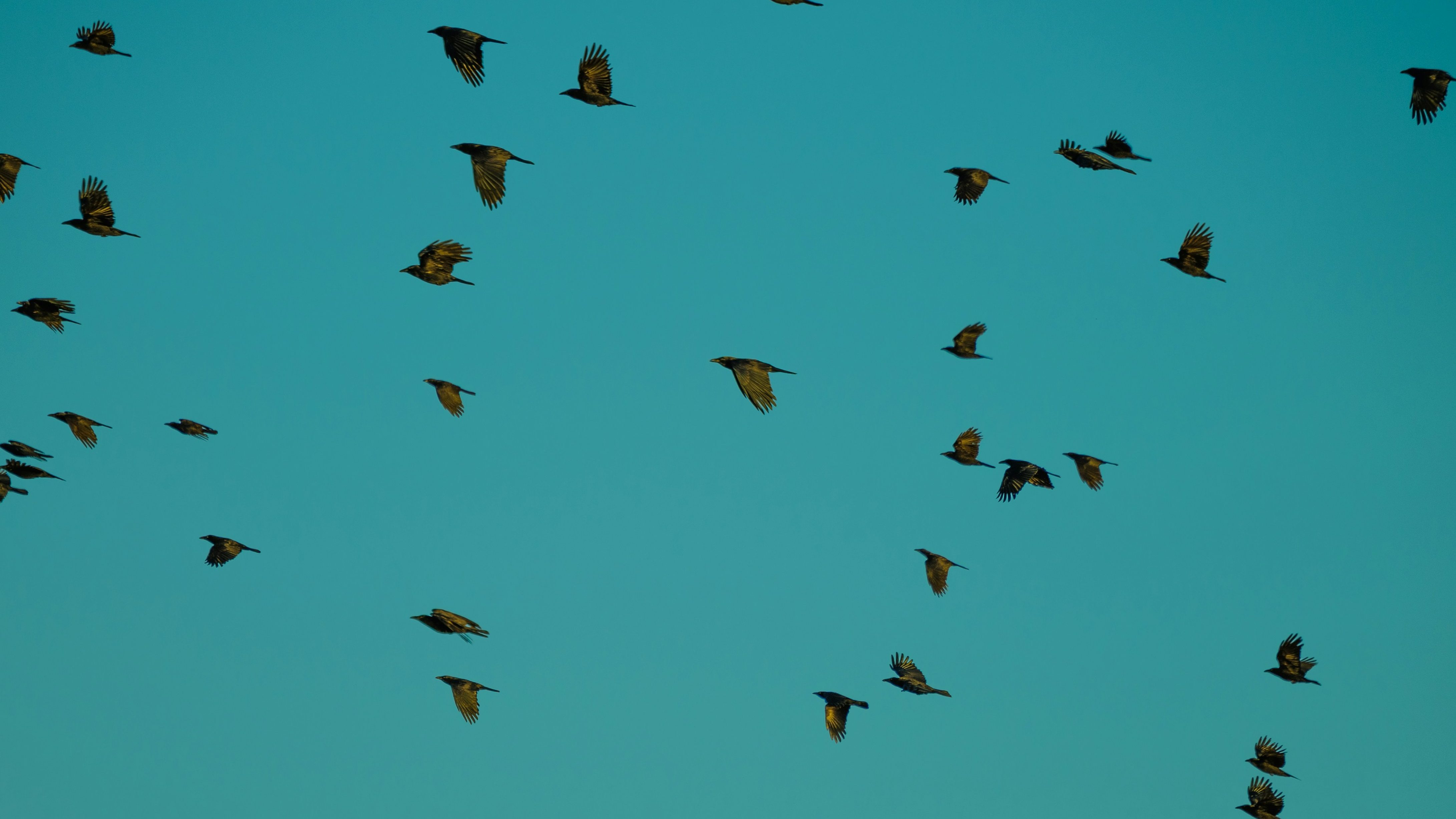
Migration through New York City is a miracle hiding in plain sight. Every spring and fall, millions of tiny travelers pass overhead, guided by the stars, drawn by survival—and occasionally interrupted by a city that’s both an obstacle and oasis.
“New York has, for all of its concrete and its giant buildings, it has really good habitat for birds and other wildlife. So the diversity is there and really needs to be protected and can coexist with us” Said Quayle .
Thanks to the efforts of NYC Bird Alliance, the Wild Bird Fund, and the citizens who care, that ancient journey has a fighting chance –even in the most urban of landscapes
 Outer Haven